

How Much Does a Walk-In Shower Cost in Western MA? (2026 Guide)
National cost guides put most walk-in shower projects between roughly $4,500 and $15,000, with common averages around $9,000 to $12,000 depending on the source. Some simple acrylic systems can land lower, while custom tile showers, curbless entries, and higher-end finishes can move well above that range. The honest answer is that no two bathrooms are the same. Your final cost depends on the shower size, wall material, plumbing layout, glass, fixtures, accessibility needs, and what is found behind the walls. Dave Davidson Remodeling brings 35+ years of experience to bathroom remodeling projects across Western MA and Northern CT, with one licensed contractor personally handling the work from start to finish.
Average Walk-In Shower Costs in 2026
Most national cost guides show walk-in shower installation as a wide price range because the project can mean several different things. A basic acrylic or prefab walk-in shower is not the same as a custom tile shower with frameless glass, a bench, niche, rainfall shower head, and barrier-free entry.
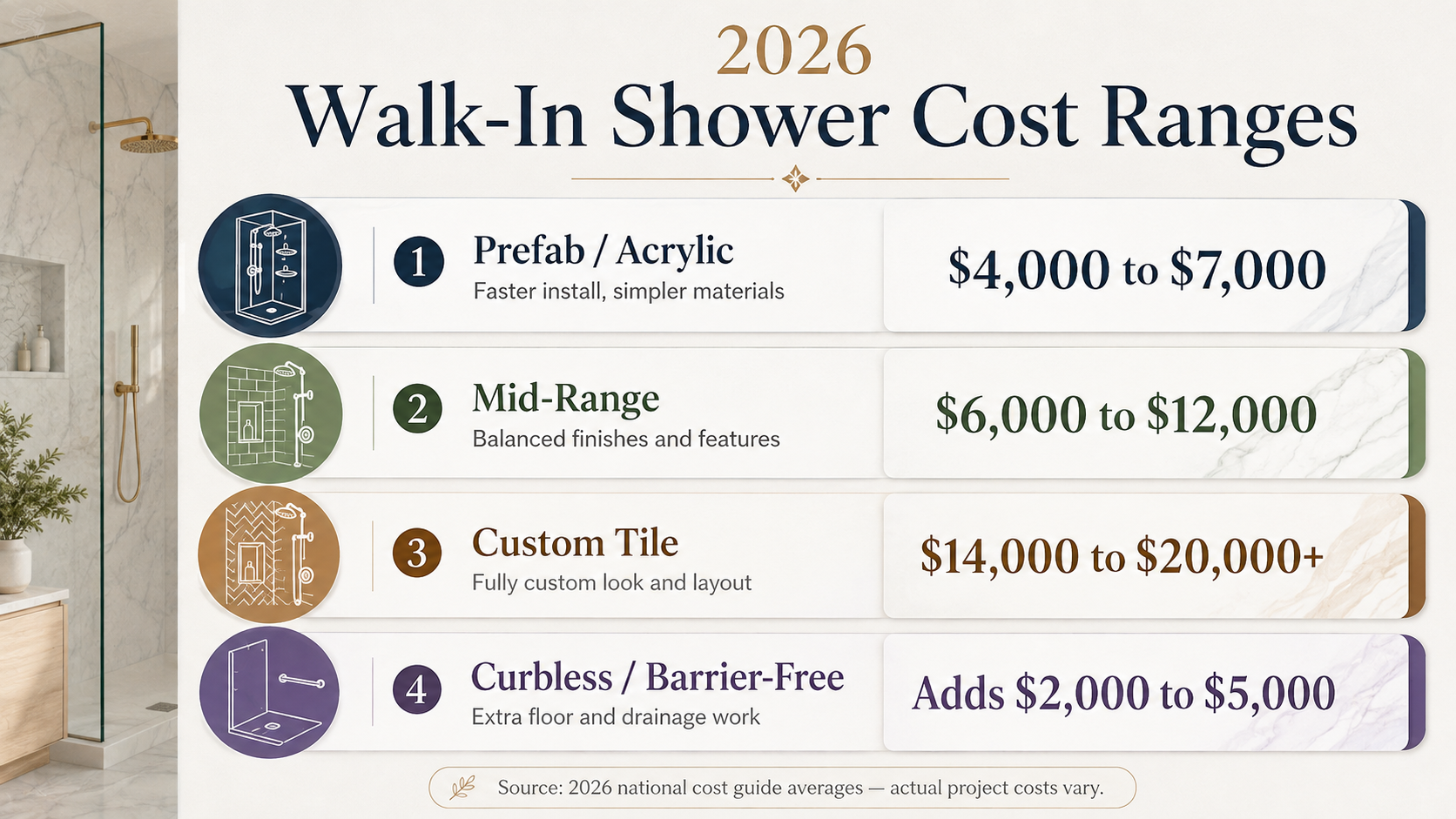
For planning purposes, national averages generally fall into these broad tiers:
- Prefab or acrylic walk-in shower: about $4,000 to $7,000 installed
- Mid-range walk-in shower:
about $6,000 to $12,000
- Custom tile walk-in shower:
about $14,000 to $20,000+
- Tub-to-shower conversion: about $1,500 to $8,000 nationally, depending on scope
- Curbless or barrier-free shower: can add $2,000 to $5,000 because of drainage and floor changes
These numbers are only a starting point. A walk-in shower cost in Western MA may run higher than national averages because Northeast labor markets, older homes, and existing bathroom conditions can affect the amount of work involved. A bathroom in an older Springfield, Chicopee, or Westfield home may need plumbing updates, wall repairs, or extra prep before the new shower can be installed.
That is why online averages should be used for budgeting, not as a final quote. A basic acrylic swap and a custom tile shower may fit in the same footprint, but they are very different projects. If you are comparing options, Dave can walk you through the difference between standard walk-in showers and more customized designs during an in-home consultation.
What Drives the Cost Up or Down
Wall Materials: Acrylic vs. Tile
Wall material is one of the biggest price differences in any walk-in shower installation cost. Acrylic and prefab shower systems are usually faster to install and cost less than a fully custom tile shower. They can be a good fit for homeowners who want a clean, simple update without building every detail from scratch.
Tile gives you more control over the finished look. It also adds more labor because the wall prep, waterproofing, tile layout, grout, cuts, corners, and finish work all matter. Custom tile can also include granite, marble, or other higher-end materials. The material you fall in love with can be one of the biggest variables in your quote.
Size and Layout
The more the layout changes, the more the cost can change. Keeping the shower in the same footprint is usually simpler than expanding it, moving a wall, or changing the plumbing location. If the existing drain can stay where it is, that can help keep the project more controlled.
Once a drain needs to move, or the shower needs to be enlarged, the labor picture changes. Floors may need to be opened, plumbing may need to be adjusted, and the surrounding bathroom may need extra repair or finish work. Two showers can look similar in a finished photo, but if one required plumbing changes and the other did not, the final cost can be very different.
Curb, Low-Threshold, or Curbless Entry
Entry style also affects price. A standard curbed shower is usually the simplest option. A low-threshold shower can make entry easier while keeping the project more straightforward than a fully curbless design.
A curbless or barrier-free walk-in shower requires more planning because the floor has to be shaped for proper drainage. That can mean modifying the subfloor, adjusting slope, and making sure water moves where it should. For many homeowners, the added cost is worth it for accessibility, aging in place, and resale appeal. It is especially helpful for anyone who wants a shower that is easier to enter now and in the future.
Glass, Fixtures, and Features
Glass and fixtures are another area where choices add up. Framed glass usually costs less than frameless glass. A standard shower head costs less than a rainfall head, handheld shower system, or upgraded fixture package.
Features like built-in benches, recessed niches, grab bars, shelves, and custom trim can make the shower more comfortable and useful. They also change the material and labor needed. These extras are not bad choices. They are just decisions that should be included in the quote from the beginning, so you know what you are paying for and why.
What’s Behind the Wall
This is one of the biggest reasons quotes vary. Many homes in Western MA were built decades ago, and bathrooms can hide older plumbing, moisture damage, poor previous repairs, or electrical issues that do not show until demolition begins. A shower that looks simple from the outside may need extra work once the old tub or wall surround is removed.
This is common in older homes around Springfield, Westfield, Chicopee, Enfield, and Suffield. An experienced contractor knows to look for signs of hidden problems before the project starts. Dave’s in-home consultation helps identify these issues early, so the quote is based on the real condition of the bathroom, not just the finished look you want.
Tub-to-Shower Conversion vs. New Walk-In Shower
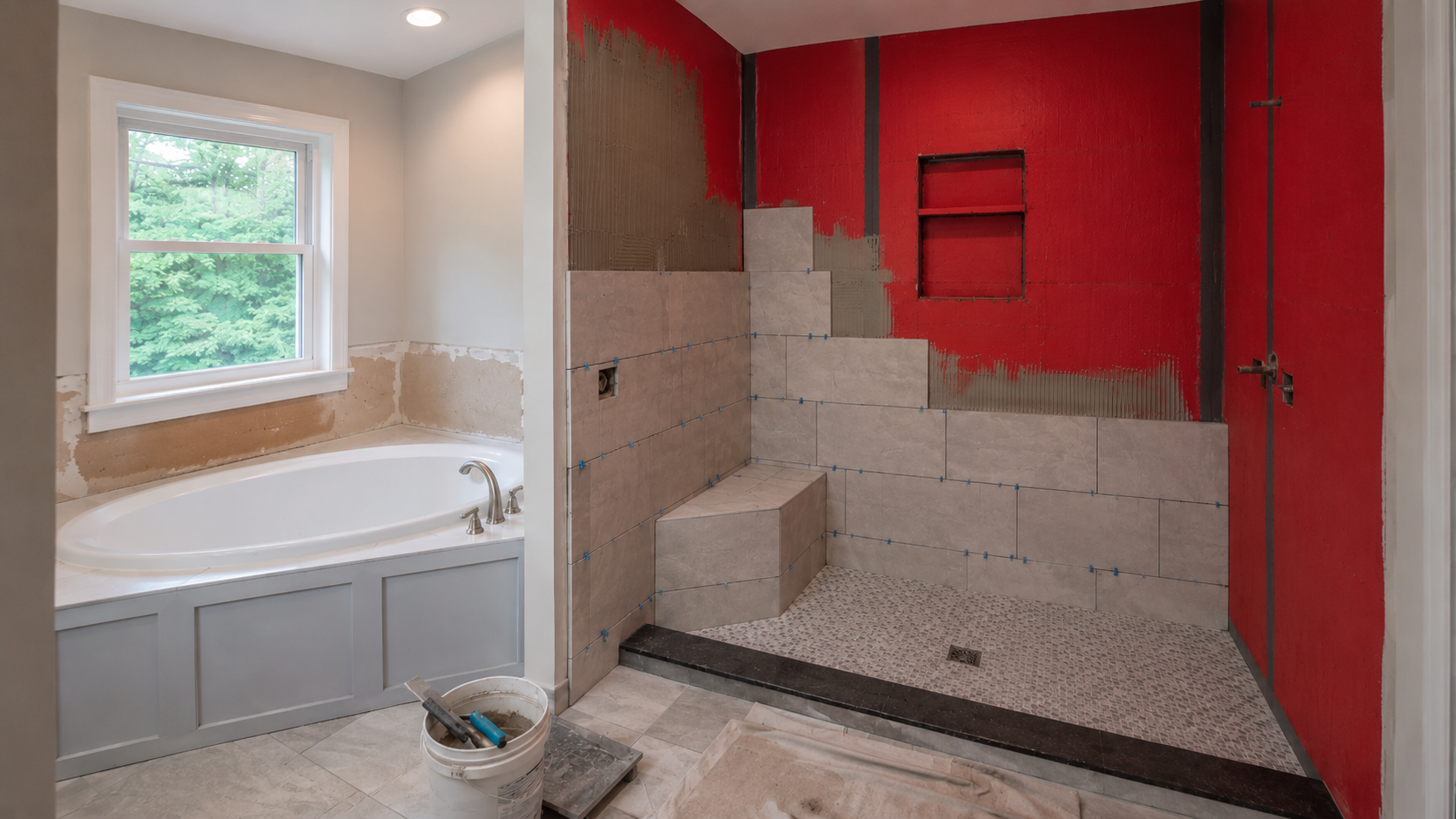
Many homeowners asking about walk-in shower cost are really asking about tub-to-shower conversion cost. A tub-to-shower conversion removes the existing bathtub and replaces it with a shower, usually in the same footprint. Because the general space and plumbing location may stay the same, this type of project can land closer to the lower end of published national ranges.
A new walk-in shower or expanded shower layout can cost more because it may involve moving plumbing, changing walls, adjusting flooring, or building a custom tile system. A one-day acrylic shower can be a faster and more budget-friendly option, while a custom tile build gives you more control over the final design. The right choice depends on your goals, budget, timeline, and how you want the bathroom to feel when it is finished.
Is a Walk-In Shower Worth the Cost?
For many homeowners, a walk-in shower is worth the cost because it improves daily use. It can make the bathroom feel more open, easier to clean, and more comfortable to use. It can also make entry easier for homeowners who are thinking about aging in place or planning for future mobility needs.
A walk-in shower can also help with buyer appeal. Many buyers like updated bathrooms, clean tile, glass shower doors, and modern layouts. That does not mean every project returns the full cost at resale, but a well-built shower can make the bathroom more useful and more appealing while you are still living in the home.
Getting a Real Number for Your Bathroom
Online averages can help you plan, but only an in-home look can give you a real number for your bathroom. Dave Davidson Remodeling looks at the existing space, plumbing, walls, layout, material choices, and the condition of the bathroom before giving a detailed written quote.
You will know what is included, what choices affect the price, and what to expect before work begins. Dave personally handles the project from start to finish, so you are not passed from one crew to another. Dave Davidson Remodeling serves homeowners across Hampden County, Hampshire County, and Hartford County CT, including Enfield, Suffield, Windsor Locks, and nearby towns.
Click to Call Dave Davidson Remodeling or get started online to schedule a free consultation.